Living with thinning hair or noticeable scalp recession can slowly chip away at your everyday confidence, affecting how you feel in professional meetings, social gatherings, and personal moments. Millions of men and women quietly struggle with progressive hair loss, searching for answers beyond temporary cosmetic disguises or unreliable topicals. When permanent density and a youthful framing of the face are the primary goals, surgical restoration stands out as the ultimate medical benchmark. Understanding the modern mechanics behind high-precision Hair Transplantation empowers you to take complete ownership of your appearance with absolute clarity and peace of mind.
The decision to undergo hair restoration is far more than a simple aesthetic choice; it represents a meaningful commitment to your personal presentation and long-term self-assurance. Today, advanced clinical procedures have replaced outdated, harsh methods with sophisticated micro-surgical practices that deliver completely seamless outcomes. At Flash Cure Med, the emphasis remains firmly on combining meticulous surgical execution with artistic hairline customization, ensuring every newly placed hair follicle matches the surrounding growth dynamics flawlessly.
Understanding the Physiological Mechanics of Follicular Transfer
To fully grasp why modern medical restoration works so effectively, it helps to look at the underlying biology of human scalp hair. Human hair does not grow as single isolated strands directly out of the dermis. Instead, it grows in tiny, naturally occurring biological bundles known as follicular units, which contain anywhere from one to four individual hairs alongside supporting sebaceous glands and micro-vessels.
During a successful Hair Transplantation, healthy, genetically resilient follicular units are carefully relocated from the dense back and sides of the scalp (commonly designated as the donor zone) to regions suffering from thinning or severe recession (the recipient zone). Because donor follicles are biologically programmed to resist the shrinking effects of dihydrotestosterone (DHT), they retain their permanent growth characteristics even after being transplanted to a new region.
This biological stability ensures that properly transferred grafts continue to produce strong, healthy hair shafts for a lifetime, provided the surgical extraction and placement phases respect the delicate living tissue of each root.
Comparing Contemporary Surgical Methodologies
Clinical hair restoration has transformed radically over recent decades. Legacy strip techniques that required long linear scalp incisions are now largely replaced by sophisticated micro-punches and direct implantation tools. Understanding the nuances between these modern approaches helps patients collaborate effectively with their clinical teams.
Advanced Follicular Unit Extraction
Follicular Unit Extraction, widely known as FUE, serves as a cornerstone of modern minimal-incision scalp restoration. In this procedure, specialized motorized or manual micro-punches ranging from 0.7mm to 0.9mm are used to isolate individual donor units directly from the scalp.
- Minimal Trauma: The micro-punches create tiny circular entry points that heal rapidly without requiring deep surgical sutures or leaves linear marks.
- High Design Flexibility: Surgeons can selectively harvest single-hair units for delicate hairline borders and multi-hair units for deep interior density.
- Broad Donor Sourcing: Allows precise harvesting across larger donor surface areas, maximizing the total graft yield safely.
Direct Hair Implantation Variations
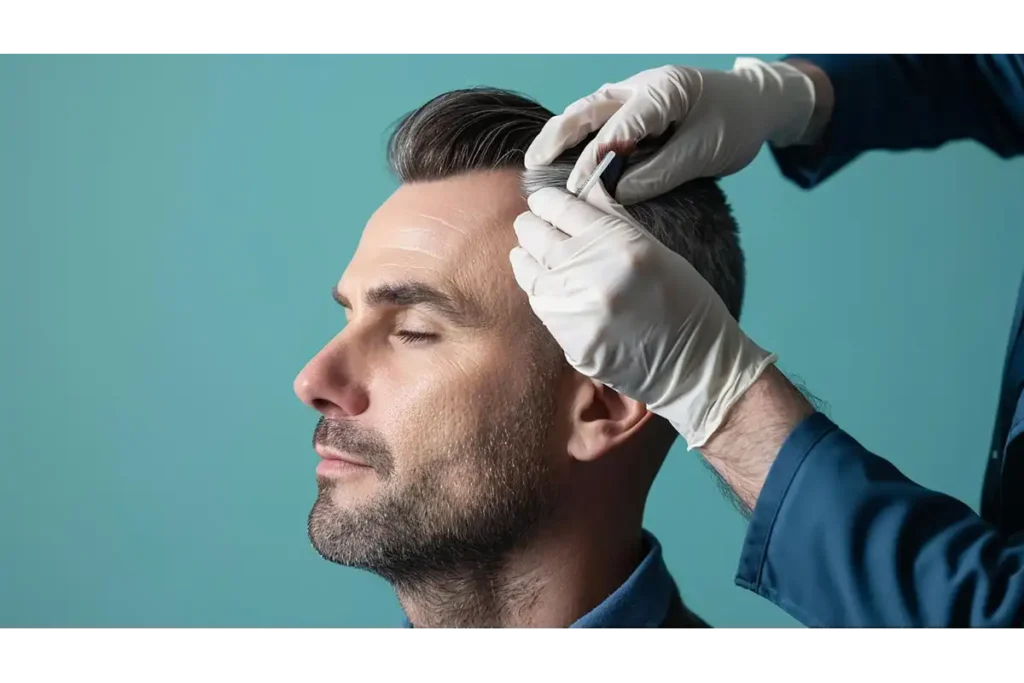
Direct Hair Implantation, or DHI, refines the graft placement stage using highly specialized pen-like instruments called implanters. Rather than creating recipient slits in advance, the surgical specialist loads each harvested follicle into the implanter device and inserts it directly into the dermis in a single fluid motion.
- Precision Depth and Direction: Gives the specialist exact control over insertion angles, entry depth, and natural growth orientation.
- Minimized Handling: Reduces direct contact with delicate follicle roots, protecting overall cell viability during transfer.
- High-Density Target Options: Allows clinical teams to place grafts closely between existing hair strands without necessitating full scalp shaving in many instances.
The Step-by-Step Patient Pathway
Achieving dense, lifelong hair density demands meticulous planning long before the first graft is ever harvested. A structured, patient-centric workflow ensures safety, comfort, and exceptional aesthetic alignment throughout the clinical experience.
- Diagnostic Evaluation: Detailed microscopic analysis of donor hair density, follicle caliber, scalp elasticity, and specific loss progression patterns.
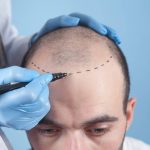
- Artistic Contour Blueprinting: Designing a unique, age-appropriate hairline that respects facial bone structure, temple angles, and natural hair movement.
- Targeted Local Anesthesia: Administering comfortable, localized numbing solutions to guarantee a completely painless surgical process.
- Gentle Harvesting Phase: Extracting healthy graft units systematically to protect overall donor area integrity and prevent over-harvesting.
- Vitality-Focused Storage: Holding harvested follicles in temperature-controlled hypothermic nutrient solutions to maintain maximal cell survival rates.
- Controlled Placement: Aligning each graft carefully according to physiological growth angles, density gradients, and hairline design blueprints.
The Art and Science of Crafting Natural Hairlines
While technical precision dictates graft survival, artistic intuition determines whether a restored hairline looks authentic or obvious. A common flaw in low-quality procedures is a harsh, straight hairline that completely lacks subtle natural variations. Nature rarely builds straight lines across the human forehead.
An expert surgical team meticulously arranges single-hair graft units along the very front edge, creating a soft, feather-like transition zone. Directly behind this gentle border, multi-hair graft units are placed gradually to build visual density and depth. The specialists at Flash Cure Med pay rigorous attention to the micro-angles of graft insertion, matching the natural outward angle of original hair growth so that restored strands sit, wave, and lay naturally when styled.
Recovery Expectations and the Annual Growth Timeline
Patience plays a crucial role in any successful journey through Hair Transplantation. Understanding the biological timeline of healing and follicle maturation prevents unnecessary anxiety during the initial months following surgery.
The first ten days are focused entirely on basic graft setting and initial epidermal healing. Small micro-crusts form around individual entry points and naturally wash away within the first two weeks with gentle care protocols. Scalp redness subsides gradually, and patients usually return to light routines within a few days.
Between weeks three and six, most patients experience a physiological event called shock shedding. During this phase, the newly transplanted hair shafts temporarily shed while the living root structure remains safely anchored inside the dermis. This shedding is a normal part of the follicle resting cycle before renewed growth begins.
By month three or four, fine new hair strands begin to emerge from the scalp surface. Around months six to eight, noticeable visual coverage develops as hair shafts thicken in diameter and grow longer. Complete density, full texture integration, and final mature outcomes are achieved between twelve and fifteen months post-procedure.
Proactive Post-Procedure Care Protocols
Proper post-operative maintenance directly influences graft survival rates and overall healing speed. Protecting your investment requires careful adherence to clinical directions during the critical early healing window.
- Gentle Washing Protocols: Using specialized low-pH foams and soft rinsing techniques to keep the scalp clean without disrupting delicate fresh grafts.
- Positioned Resting: Keeping the head elevated at a comfortable angle during sleep for the first few nights to minimize facial swelling.
- Activity Management: Avoiding strenuous physical workouts, heavy lifting, direct intense sunlight, and heavy sweating for two weeks.
- Scalp Protection: Refraining from wearing tight hats, helmets, or touching scabbed areas until fully cleared by your medical advisor.
Why Medical Expertise and Clinical Standards Matter
Hair restoration requires a delicate balance between surgical skill, dermatological understanding, and visual aesthetics. Selecting an inexperienced team or choosing low-cost, mass-production facilities increases the risk of damaged donor zones, poor graft angles, unnatural growth patterns, and disappointing overall density.
Partnering with experienced professionals who treat each patient as an individual ensures safe graft handling, optimal survival rates, and long-term donor zone preservation. At Flash Cure Med, every stage of care is structured around clinical excellence, patient comfort, and ultra-natural cosmetic results tailored to your long-term goals.
Frequently Asked Questions
Is hair restoration surgery painful during or after the procedure?
No, the procedure is carried out under local anesthesia, ensuring you remain fully comfortable throughout the entire session. Once the initial numbing phase takes effect, you will feel no sharp pain. Any mild post-procedure tightness or soft donor tenderness is easily managed using mild analgesics provided by your care team.
How long do transplanted hair grafts continue to grow?
Transplanted hair grafts are harvested from genetically stable regions at the back and sides of the head that do not possess DHT-sensitive receptors. Because these follicles retain their original genetic traits when relocated, the results are designed to last permanently for the rest of your life.
How many days of work should I plan to take off following surgery?
Most patients returning to standard desk or office environments feel fully comfortable resuming work within three to five days. If your daily profession involves heavy physical labor, intense outdoor heat, direct sun exposure, or protective hard hats, planning a full ten to fourteen days of recovery is recommended.
Can transplanted hair be cut, washed, and styled normally?
Yes. Once your scalp has completely healed and the new hair strands have fully matured, your transplanted hair behaves identically to your original natural hair. You can wash, dry, cut, comb, and style it using your favorite hair care products without any special restrictions.
Restoring your hair density is an empowering step toward reclaiming full personal confidence and renewing your visual profile. By prioritizing expert medical care, customized artistic design, and patient-focused safety standards, you ensure a comfortable healing journey and dense, lifelong hair growth. Reach out to the dedicated specialists at Flash Cure Med today to schedule your comprehensive individual evaluation and take your first step toward permanent hair renewal.